
Posted February 03, 2026 in Bio Stimulator injectables
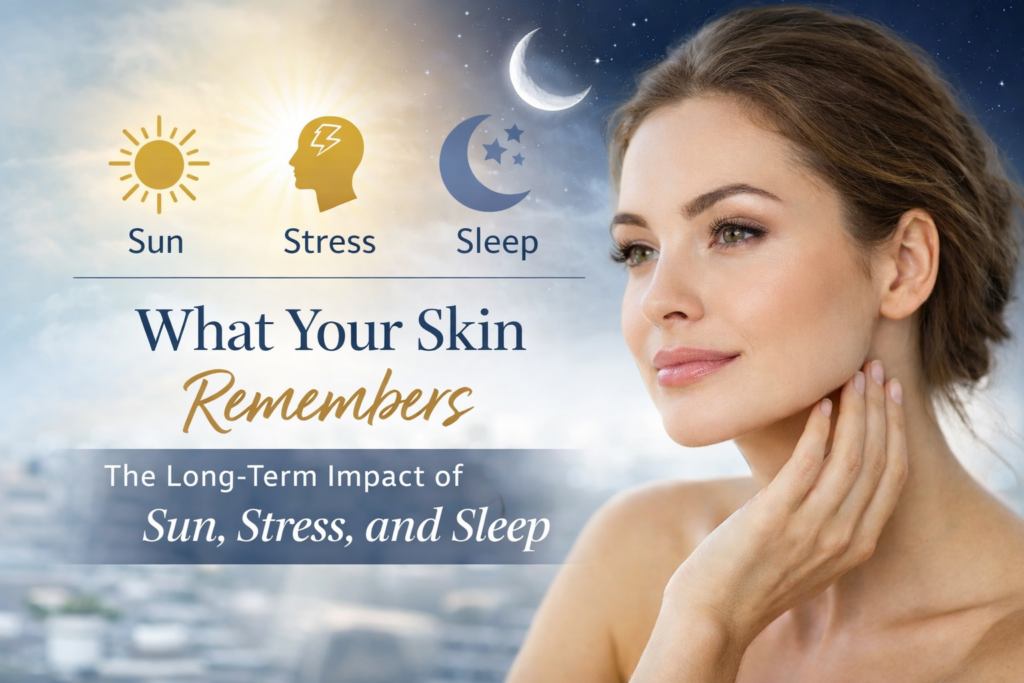
Your skin is more than a reflection of how you look today—it’s a record of how you’ve lived. Every late night, stressful season, and unprotected hour in the sun leaves an imprint. While some effects fade, others quietly accumulate over time.
In medical aesthetics, we often say the skin remembers. Understanding what it remembers—and how those memories show up years later—can change the way you approach skin care, prevention, and long-term aging.
How the Skin “Stores” Damage Over Time
Skin aging isn’t caused by one event or one habit. It’s the result of repeated exposure to environmental and lifestyle stressors that slowly alter skin structure at a cellular level.
These changes affect:
- Collagen and elastin production
- Skin barrier function
- Pigmentation and tone
- Texture and elasticity
The most influential factors? Sun exposure, chronic stress, and sleep quality.
The Lasting Effects of Sun Exposure on Skin
Sun damage is cumulative, meaning it builds silently over time—even when there’s no immediate burn.
What the Skin Remembers About the Sun
- UV radiation breaks down collagen fibers
- Pigment-producing cells become overactive
- DNA damage accumulates within skin cells
This often shows up years later as:
- Fine lines and wrinkles
- Sun spots and uneven tone
- Loss of firmness and elasticity
Even short, unprotected exposure—like daily errands or sitting near windows—adds up. This is why sun damage often appears long after the habits that caused it.
How Chronic Stress Accelerates Skin Aging
Stress doesn’t just affect how you feel—it directly impacts how your skin functions.
The Role of Cortisol
When stress levels are consistently high, the body releases cortisol, a hormone that:
- Increases inflammation
- Slows skin repair
- Weakens the skin barrier
Over time, this can contribute to:
- Dullness and dehydration
- Increased sensitivity
- Premature fine lines
- Breakouts and uneven texture
Your skin remembers prolonged stress even after life calms down.
Why Sleep Is One of the Most Powerful Anti-Aging Tools
Sleep is when the skin repairs itself most effectively. During deep sleep, the body:
- Produces collagen
- Repairs cellular damage
- Restores moisture balance
What Happens When Sleep Is Inconsistent
Chronic sleep deprivation can lead to:
- Slower cell turnover
- Reduced collagen production
- Dark circles and puffiness
- A tired, aged appearance
Poor sleep doesn’t just make skin look tired—it limits its ability to recover long-term.
Why These Factors Show Up Later—Not Immediately
One of the most surprising aspects of skin aging is delayed visibility. The habits you had in your 20s often appear in your 30s and 40s.
That’s because:
- Collagen loss is gradual
- Damage accumulates beneath the surface
- Skin compensates—until it can’t
By the time changes are visible, they’ve usually been forming for years.
Supporting Skin Memory, Not Erasing It
While past habits can’t be undone, skin health can be supported, strengthened, and preserved moving forward.
A Preventative, Supportive Approach Includes:
- Consistent sun protection
- Stress management and recovery
- Quality sleep routines
- Medical-grade skincare
- Collagen-stimulating treatments
This approach focuses on long-term skin health, not aggressive correction.
Why Prevention and Consistency Matter More Than Perfection
In modern medical aesthetics, the goal isn’t to erase every sign of aging. It’s to help the skin function better over time.
Preventative care:
- Slows visible aging
- Reduces future maintenance
- Creates more natural-looking results
Consistency—rather than intensity—is what creates healthy, resilient skin.
How Medical Aesthetics Support Long-Term Skin Health
Treatments like collagen-stimulating procedures, regenerative therapies, and personalized skincare plans work with the skin’s natural repair processes.
When paired with healthy lifestyle habits, they help:
- Improve skin texture and tone
- Support collagen production
- Restore radiance gradually
The most effective results build quietly over time—just like the damage they’re correcting.
Your Skin Is Always Responding—Starting Today
The encouraging truth is this:
Your skin also remembers care.
Every protective choice, every night of rest, and every supportive treatment contributes to how your skin ages moving forward. While the past leaves its mark, the future is shaped by what you do consistently now.
A Thoughtful Approach to Skin Health Starts with Understanding
At Mountcastle Medical Spa, we believe the most beautiful results come from understanding how skin truly ages—and supporting it with intention, expertise, and restraint.
Schedule a personalized consultation to learn how a preventative, long-term approach can help your skin age gracefully and naturally.
